Music & Studio
Behind the Scenes of Music Production
A behind-the-scenes view of music production, from creative direction and arrangement to recording, performance, visual identity, and release planning.
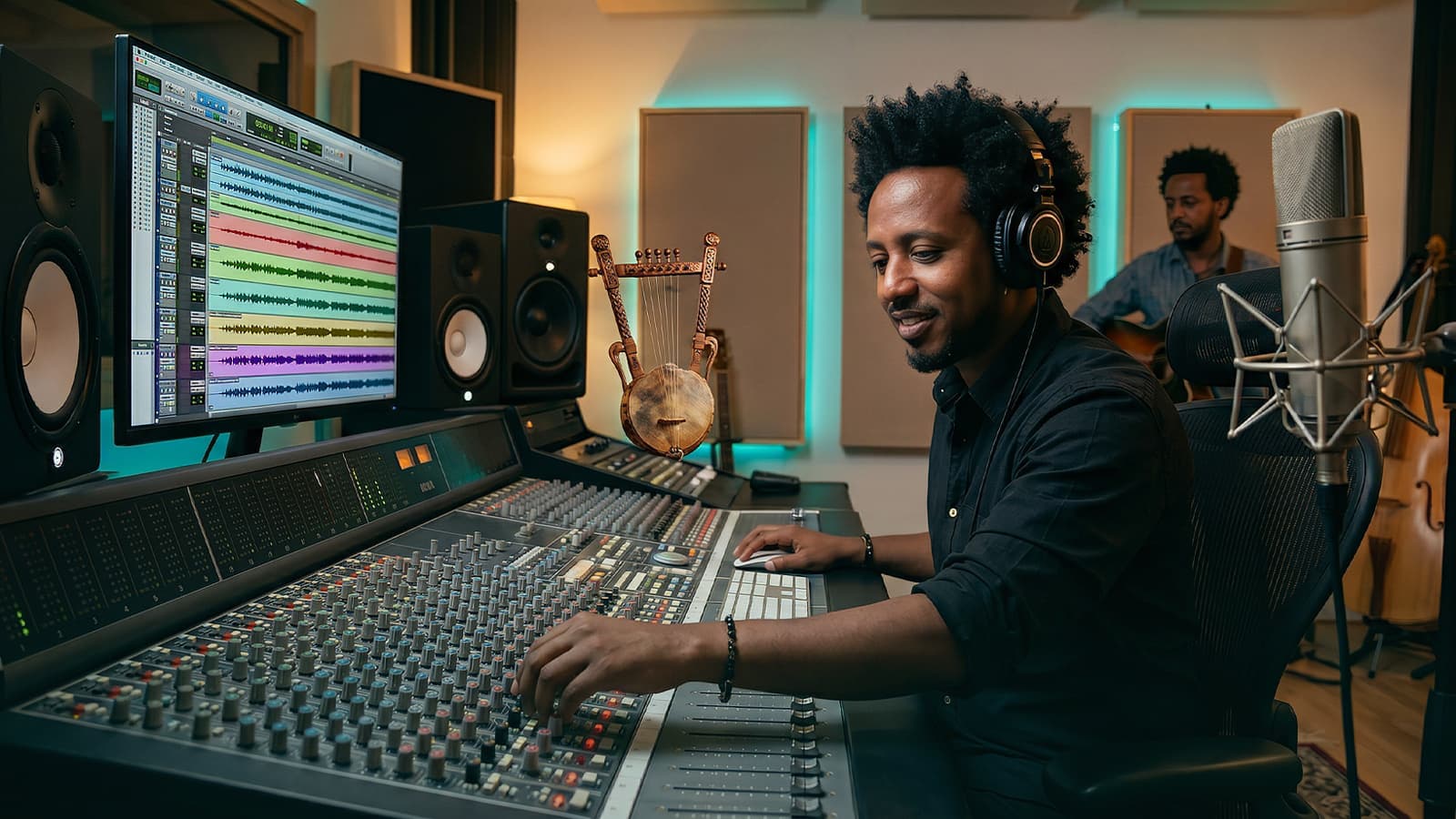
Music production begins before recording
A finished song can feel effortless to the listener, but production starts long before the final vocal or mix. It begins with direction. What is the emotional center of the track? What should the rhythm make people feel? Is the song built for headphones, a live room, a music video, or a performance moment? These choices shape the session before any technical decision matters.
For Hello G, music is part of a wider media identity. A track can become a video, a live performance, a studio story, a short clip, or a release campaign. That means production is not only about sound quality. It is about building a musical world that can travel across platforms while still feeling connected to the artist and the audience.
Arrangement creates the listener's path
Arrangement is how a song moves. It decides when the energy rises, when space opens, when a vocal needs support, and when the beat should carry the moment. A strong arrangement respects the listener's attention. It gives enough repetition to feel familiar and enough change to stay alive.
In studio work, arrangement often becomes the bridge between instinct and strategy. A melody may feel right, but the intro may be too long for a video audience. A beat may be powerful, but the vocal may need more room. A hook may be strong, but the transition into it may need tension. These are creative decisions, not just technical edits.
Recording is about performance, not just capture
A good recording session is not simply pressing record. It is creating the conditions for a performance. The artist needs to understand the emotion, the producer needs to hear what is missing, and the room needs enough focus to capture takes that feel alive. Small details matter: breath, timing, pronunciation, confidence, and the way a line lands.
This is where music production becomes personal. The best take is not always the cleanest take. Sometimes it is the one with the right urgency, warmth, or character. A producer has to know when to correct and when to preserve. That judgment is part of the sound.
The visual layer changes the release
Modern music rarely exists as audio alone. A song may need a cover image, vertical clips, performance footage, a music video, livestream moments, and behind-the-scenes content. The visual layer helps audiences understand the song faster. It gives the release a mood, a face, and a reason to be shared.
For Hello G Music, this connection between sound and media is central. Studio sessions, Tigrigna production, performance clips, and artist-led storytelling can all support the release. The goal is not to turn every song into a marketing exercise. The goal is to give the music enough context that listeners can enter the world around it.
Release planning keeps the song alive
A release does not end on upload day. The strongest music campaigns create several moments around the song. There can be a teaser, a performance clip, a production note, a lyric-focused short, a live discussion, and a video premiere. Each piece gives the audience another way to connect.
Behind the scenes, production and release planning should work together. If a song has a powerful vocal moment, capture it in the studio. If the beat has a strong live feel, plan a performance version. If the lyrics carry a story, build content around that story. Music production is strongest when the song, the visuals, and the release system support one another.
This is especially important for independent artists and creator-led music brands. The release has to earn attention without losing the feeling that made the song worth making. A thoughtful rollout can invite listeners into the process: how the idea started, what changed in the studio, why the arrangement works, and how the final performance came together. That context gives the audience more than a track. It gives them a relationship to the creative work.
A practical rollout also gives the team room to learn. Audience response can reveal which lyric connects, which visual moment people replay, and which performance clip deserves a longer version. That feedback can shape the next recording session, the next video concept, and the way future songs are introduced.