Creator Culture
Building a Creator Brand in 2026
A guide to building a creator brand with clear positioning, consistent formats, audience trust, and a media system that can grow over time.
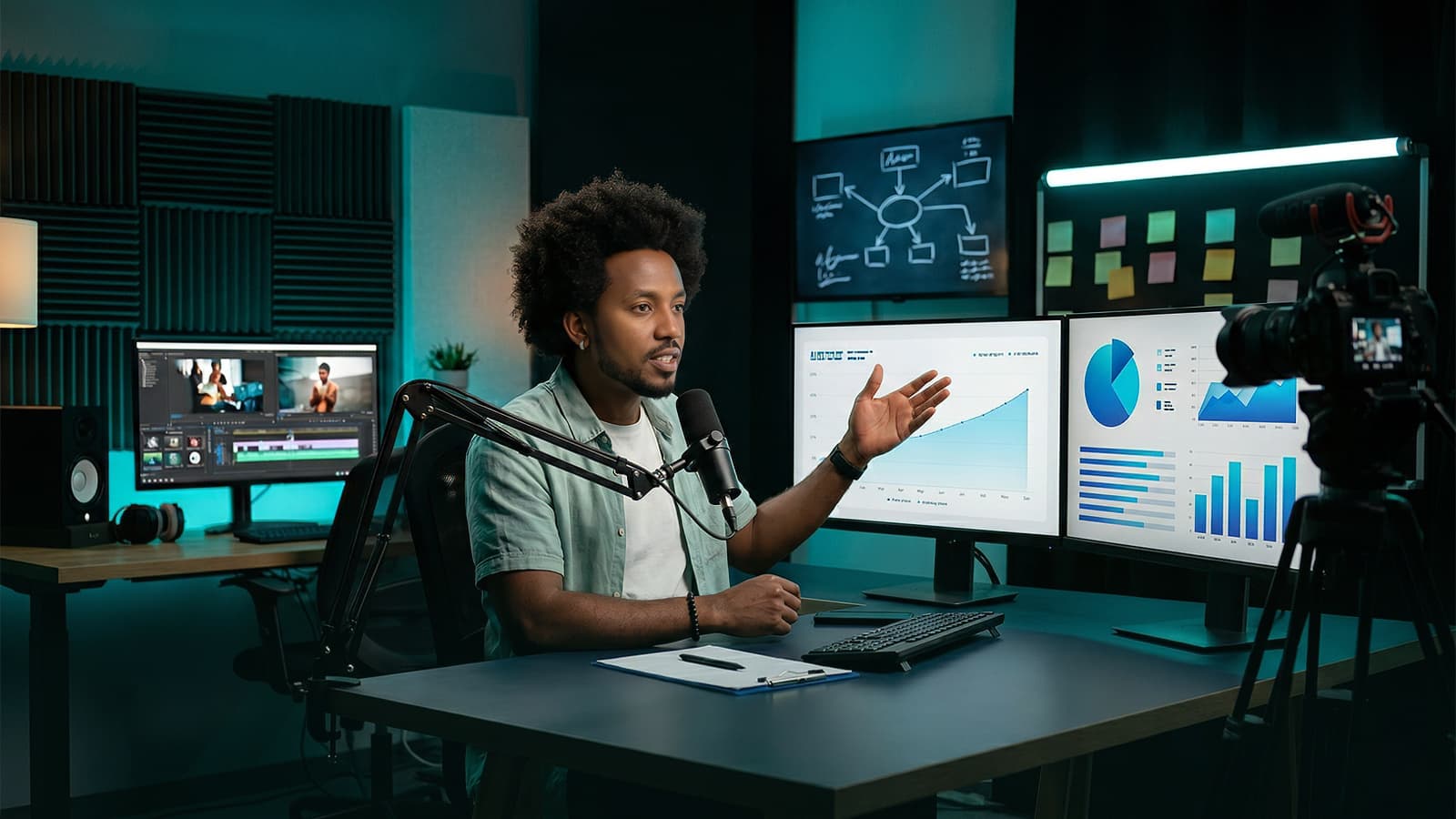
A creator brand needs more than visibility
In 2026, being visible is not the same as being memorable. A creator can post often, appear on multiple platforms, and still feel unclear to the audience. A real creator brand gives people a reason to return. It has a point of view, a recognizable format, a consistent promise, and enough personality that the audience knows what kind of experience they are stepping into.
Hello G is built around that idea. The brand is not only music, only livestreams, only videos, or only AI creator tools. It is a connected media identity. The audience can find entertainment, studio culture, creator education, and community participation under one recognizable banner. That kind of structure matters because audiences follow patterns they can understand.
Positioning starts with the audience
A strong creator brand begins by knowing who the content is for. The answer should be more specific than everyone who likes entertainment. A useful audience definition includes what people care about, what problems they face, what type of culture they recognize, and what feeling they want from the content. A creator who understands the audience can make sharper decisions about shows, clips, articles, music, and live formats.
The Hello G audience includes people interested in creator culture, music, livestream entertainment, AI tools, and community-led media. That mix gives the brand room to grow, but it also requires clarity. Each piece of content should answer a simple question: why would this matter to the audience now?
Formats create trust
Audiences trust creators who show up in recognizable ways. A recurring livestream, a music session format, a creator guide, or a weekly video category gives people a mental shortcut. They do not need to relearn the brand every time. They know what the experience is, and they can decide to return because the format has a shape.
That does not mean every post has to look identical. It means the audience should recognize the role each format plays. A live show can build connection. A video can tell a focused story. An article can explain a system. A music page can organize releases. When the parts work together, the brand feels larger than a feed of disconnected uploads.
The brand should own a point of view
The internet is full of content that summarizes what everyone already knows. A creator brand becomes stronger when it takes a position. That position can be cultural, educational, musical, comedic, or practical, but it should be real. The audience should feel that the creator is choosing what matters and filtering the noise.
For Hello G, the point of view is that entertainment and creator education can live together. Music, livestreams, community, and AI workflows are not separate worlds. They are part of the same creator media future. The brand can entertain while also showing creators how modern media is planned, produced, and distributed.
Consistency beats a perfect launch
A creator brand is not built in one announcement. It is built through repeated proof. That proof comes from publishing, improving, listening, and keeping the brand promise visible. The first version of a website, channel, or show does not need every possible feature. It needs enough clarity that people understand what the brand is and where it is going.
The practical goal is to create a system that can continue. A website gives the brand a home. A video library gives viewers a path. A live page gives broadcasts context. A blog gives ideas depth. Together, those pieces help a creator brand move from scattered content to a platform with memory, identity, and direction.
That system also protects the creator from chasing every trend. When the brand has clear pillars, new ideas can be judged against a strategy instead of a mood. A trend may be useful if it supports the audience, the format, or the message. If it does not, the brand can skip it without losing momentum. In 2026, that discipline is one of the strongest signals of a serious creator.